FAQ
Frequently asked questions
In-depth answers with examples — method, limits, process and the next step before a quote.
Below are typical questions from designers, clients and contractors. If you did not find an answer, tell us about the site under Service: location, approximate length and diameter are enough to start.
What is trenchless technology?
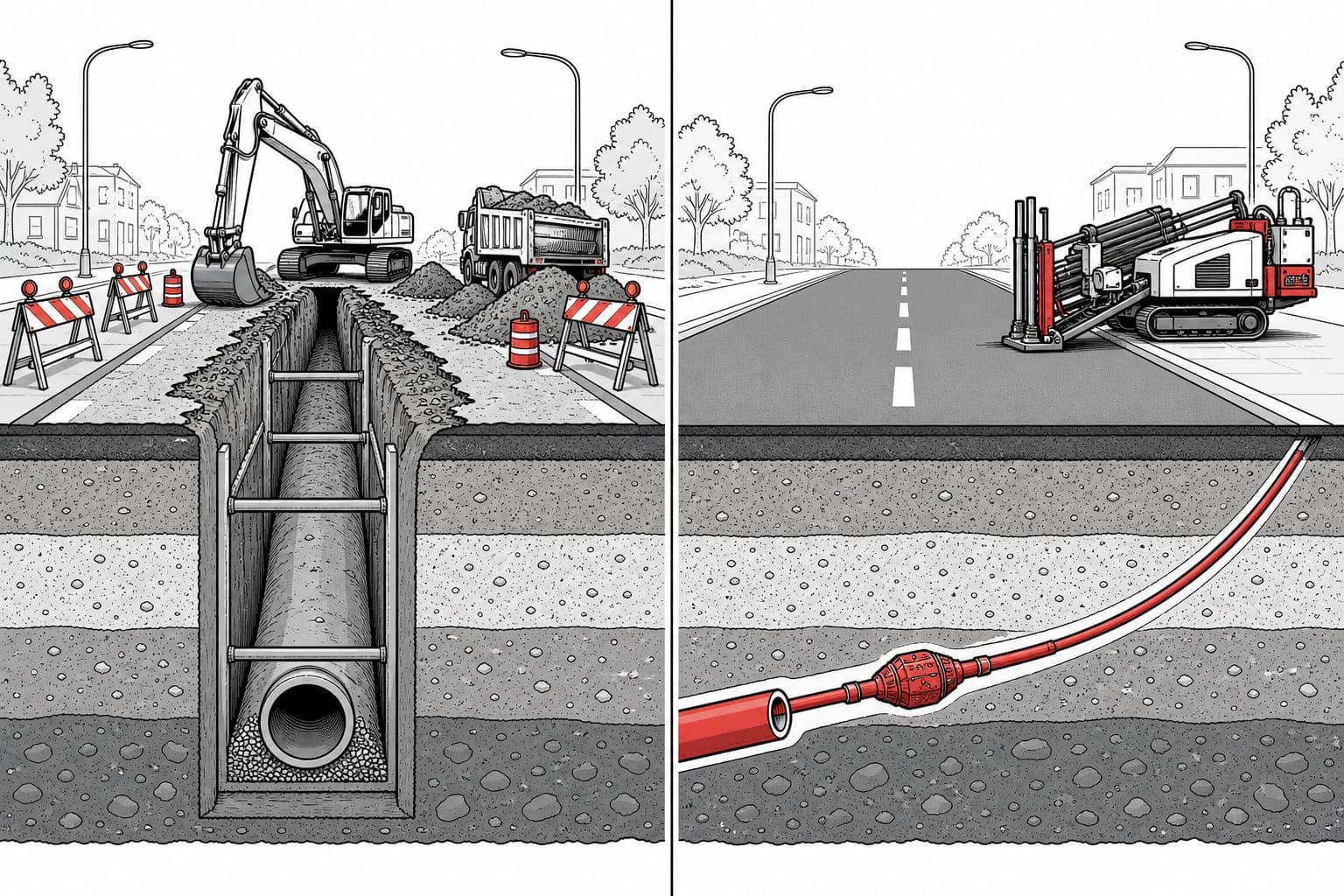
Trenchless technology installs utilities with most of the route remaining underground — without a continuous open trench along the whole section.
The goal is to reduce surface damage, traffic disruption and reinstatement cost compared with classic open cut. Above ground you typically need only launch and reception pits (or similar work areas).
Our primary method is horizontal directional drilling (HDD) — in Latvia also called HVU or caurdure.
A trenchless approach suits water, sewer, gas, heating and electrical/telecom protective conduits — especially under roads and in built-up sites.
Examples
- Utility pull-in under an asphalt street without removing pavement along the whole route
- A water or sewer section in a courtyard where a wide trench would damage landscaping
- Cable conduits under a driveway or railway crossing
What is horizontal directional drilling (HDD)?
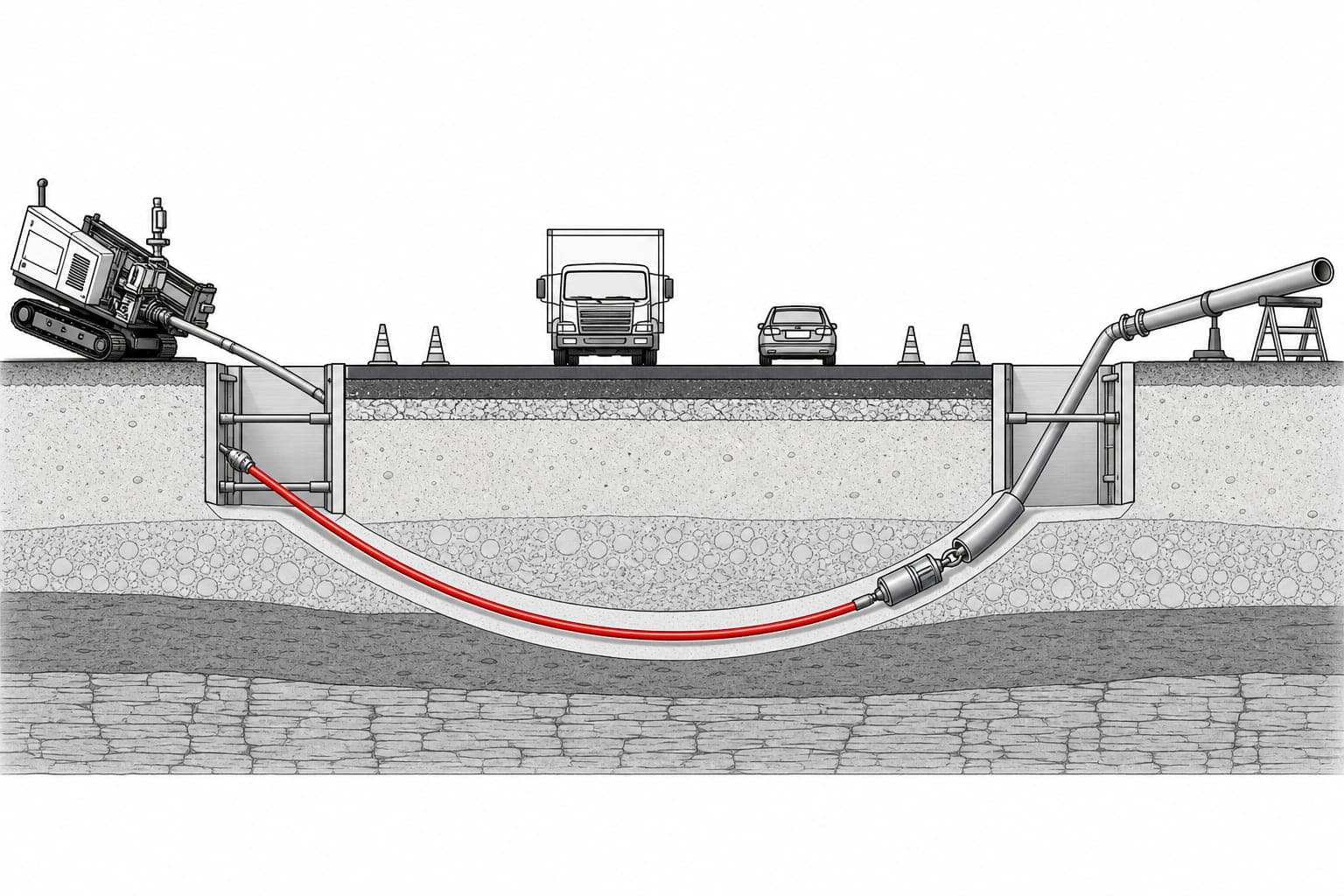
HDD is a trenchless method for installing utilities underground along a planned, controlled trajectory.
Unlike open cut, most of the route stays below the surface. Above ground you typically need only launch and reception pits (or similar work areas), not a continuous trench along the whole section.
The drill head is steered with a locating system: depth, direction and bend are controlled to the design. That lets us pass under roads, under water bodies (for example a river), and keep safe clearance from existing networks.
What is pulled in can be a water, sewer or heating pipe, an electrical/telecom casing, or another utility line installed in the prepared borehole.
Examples
- Water main under an asphalt street without full-length pavement removal
- Utility installation under a river or other water body
- Telecom casing under a site driveway
- Sewer section between two yards where a wide trench will not fit
When is HDD better than open excavation?
When surface damage, traffic disruption or dense development make a wide trench impractical or expensive.
Open cut is still logical for short routes on open land. HDD often wins when the obstacle is a road, railway, driveway, park, courtyard or an area with dense existing utilities.
We look at the full cost picture: not only drilling, but also reinstatement, diversions, downtime and approvals. Sometimes the best compromise is a short HDD section under the obstacle and open cut on both sides.
The final call depends on route, ground, diameter and launch/reception space. If the launch area is too tight, we look for another approach or a combined solution.
Examples
- Road crossing where open cut would mean closures and asphalt rebuild
- Yard route between buildings where a trench would damage landscaping and access
- Existing utility corridor that needs precise depth and trajectory
What diameters, depths and lengths are possible?
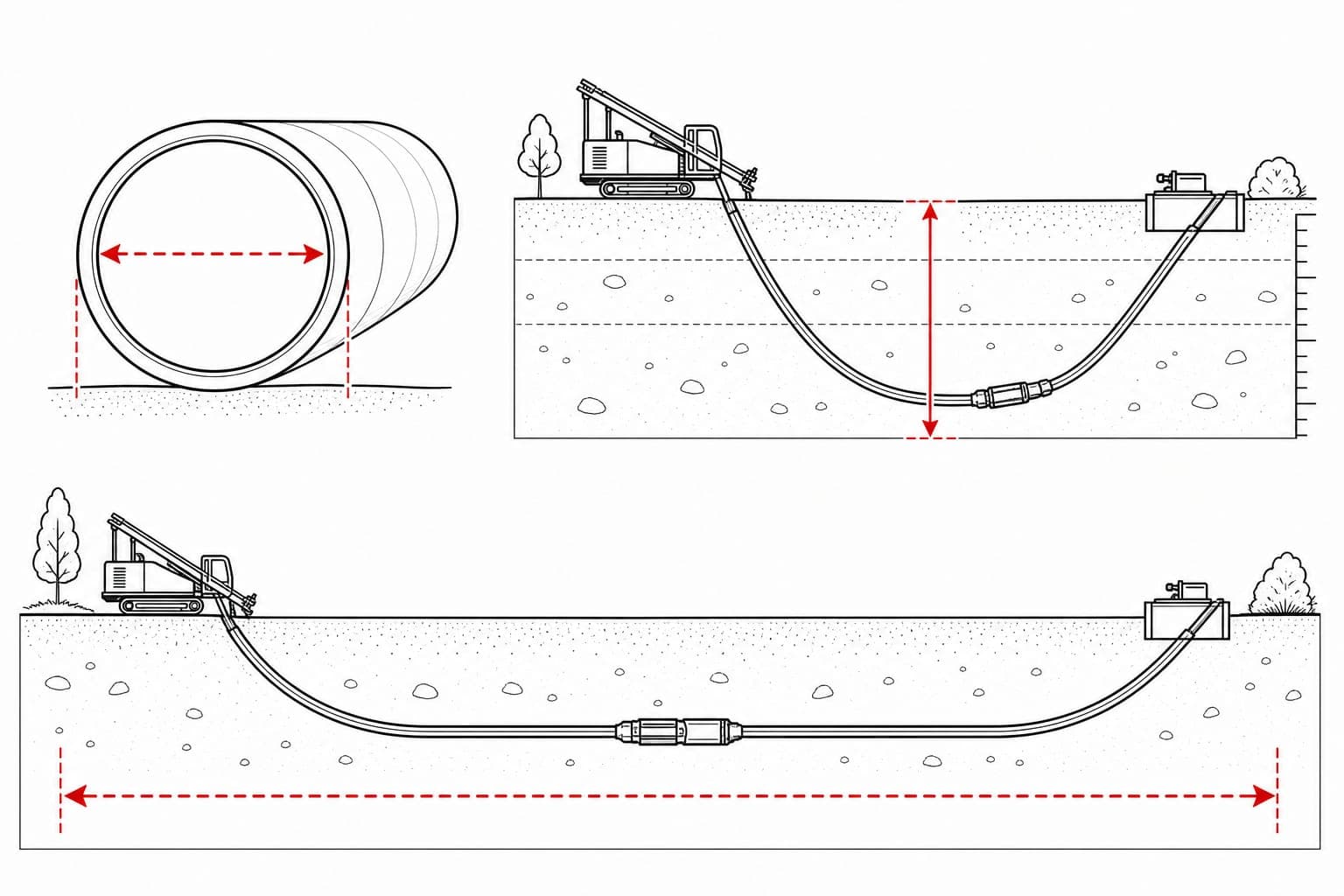
Indicative envelope: diameter up to about 700 mm (D700), depth up to about 25 m, section length up to about 450 m.
These figures are a capacity frame, not a guarantee for every site. Ground (sand, clay, gravel, rock), bend radius, pipe stiffness and available equipment set the real limits.
Larger diameter and longer runs usually mean more reaming, higher pull forces and stricter work-area needs. A short small-diameter cable casing is often simpler than a long large-diameter water/sewer section.
In the quote we state what is technically sound for that route, and where more data or splitting into sections is needed.
Examples
- ≈110–160 mm telecom casing — typical shorter road crossing
- ≈200–400 mm water main — common utilities job
- Up to ≈700 mm (D700) — larger diameters assessed case by case
How does the drilling process work?
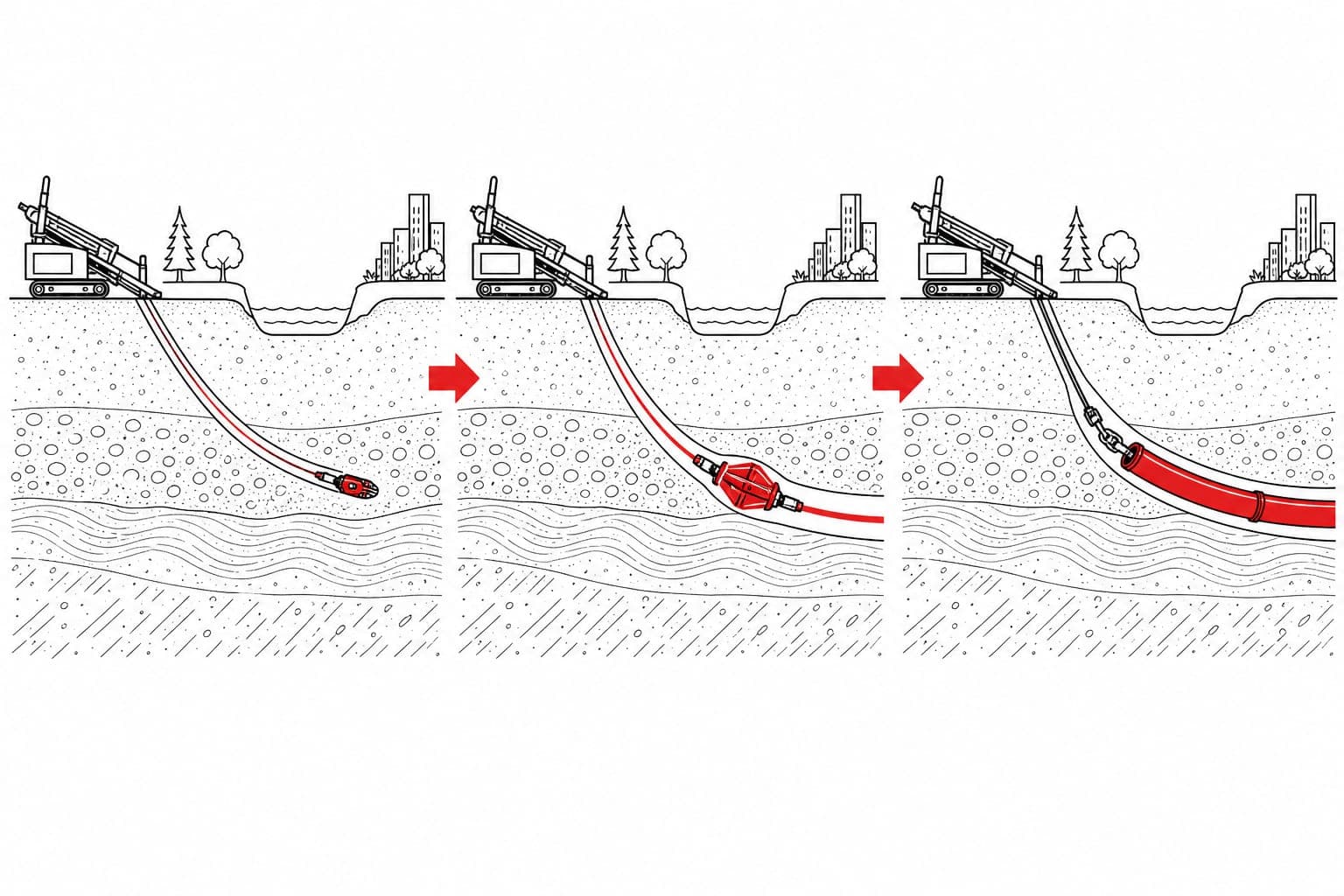
A standard HDD job follows three steps: pilot bore, reaming and pipe pullback.
1. Pilot bore — a steerable drill head creates a small-diameter hole along the designed path. Locating allows real-time depth and direction corrections.
2. Reaming — the hole is enlarged step by step to the required diameter. Drilling fluid helps stabilise the borehole walls.
3. Pullback — the pipe or casing is pulled into the prepared path. Afterwards launch and reception pits are cleaned up and local surfaces reinstated if needed.
On a given site the number of reaming passes and equipment may vary.
Examples
- Single ream + pullback — typical small/medium diameter section
- Multiple reaming passes — larger diameters or unstable ground
- Combined solution — HDD under the obstacle, open cut at connections
What information is needed for a quote?
The clearer the input, the faster we can say whether HDD fits and prepare the next step.
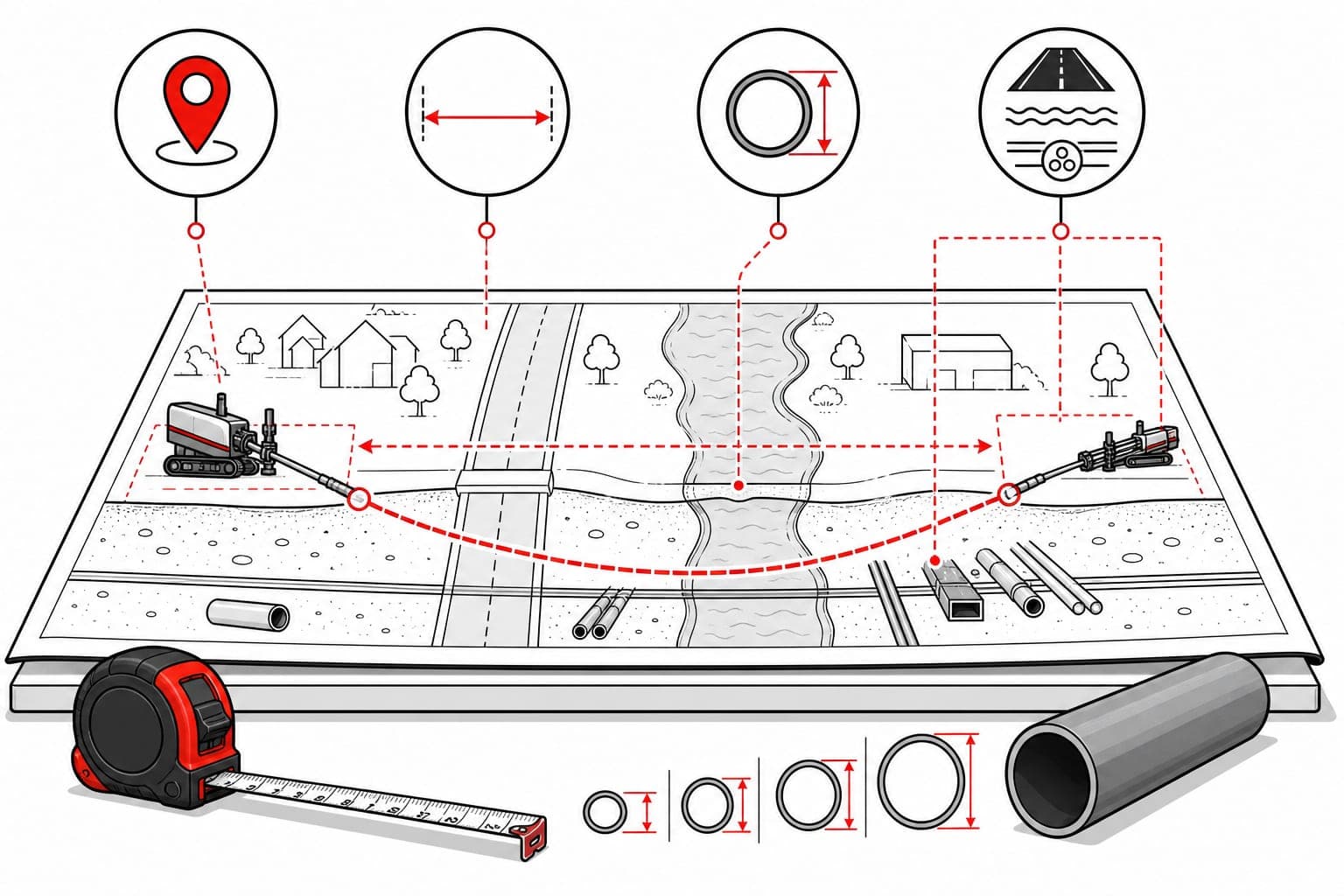
Minimum set: site location (address or coordinates), approximate route length, diameter or utility type, and known obstacles (road, river, driveway, existing networks).
Useful extras: site plan, cross-section, technical conditions, geology, photos of launch and reception pits, preferred timeline.
If some data is missing — start with what you have. We will say what else is needed before a firm quote or mobilisation.
You can email us the details or fill in the step-by-step quote form — it keeps the essentials clear.
Examples
- «Riga, ≈45 m under the street, Ø225 mm water main, asphalt both sides»
- Site plan PDF + photos from both pit locations
- Design excerpt with existing utilities and the crossing marked
How long do the works take?
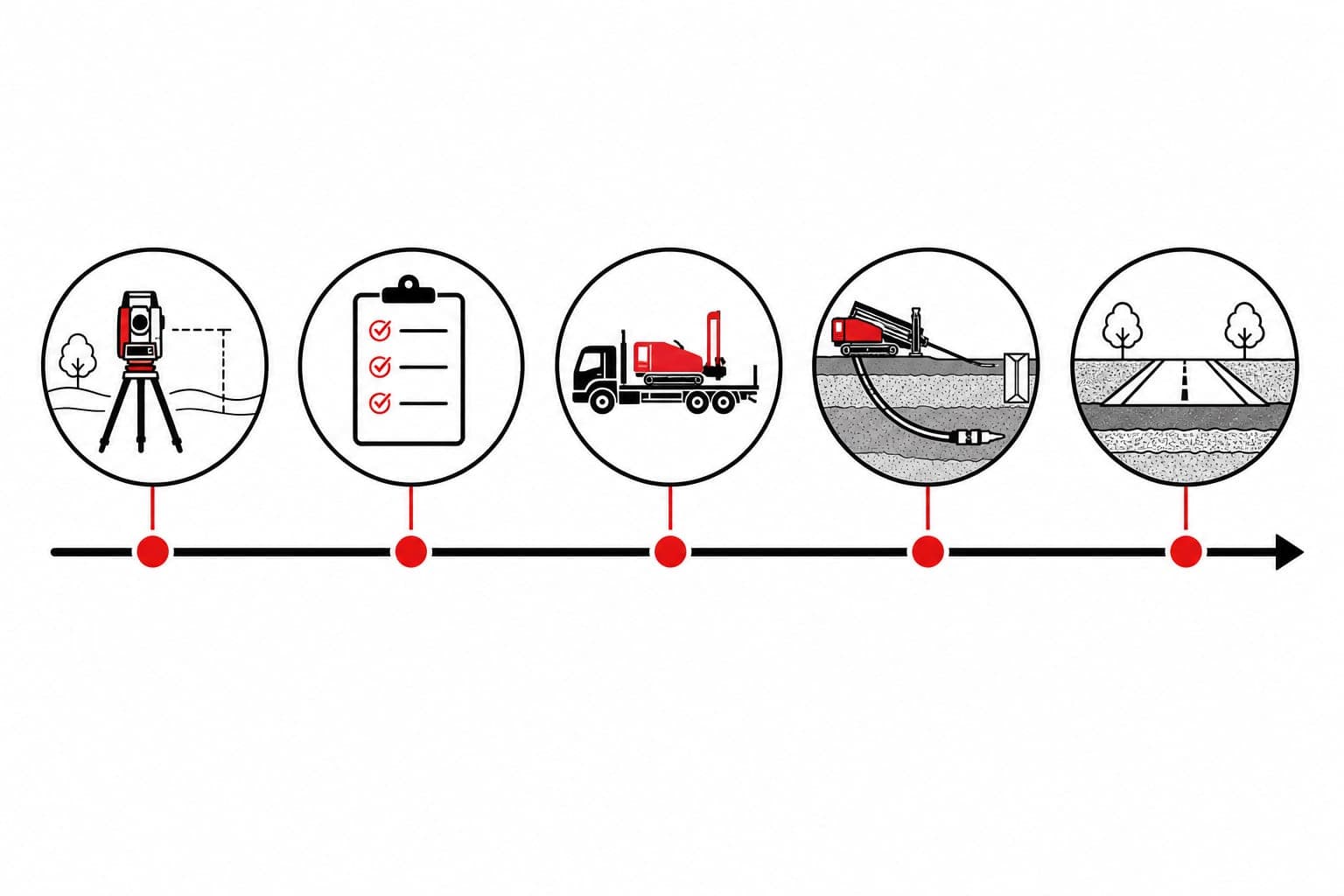
Timeline depends on length, diameter, ground, approvals and work-area prep — not only the drilling day itself.
A short, simple road crossing can often be done in a few working days after mobilisation. Longer or large-diameter runs, difficult ground and limited access extend the calendar.
Before drilling there may be approvals, utility locating, pit preparation and pipe delivery. After drilling — connections, testing and surface reinstatement.
We give an indicative schedule after assessing the route. For urgent sites we set a realistic sequence, not empty promises.
Examples
- Short cable crossing — often a few days once ready to drill
- Medium utilities section — drilling plus prep/close-out over several days
- Complex site with approvals — schedule planned in phases
Are geology or technical conditions required?
They are not always mandatory for first contact, but they reduce risk and sharpen the quote.
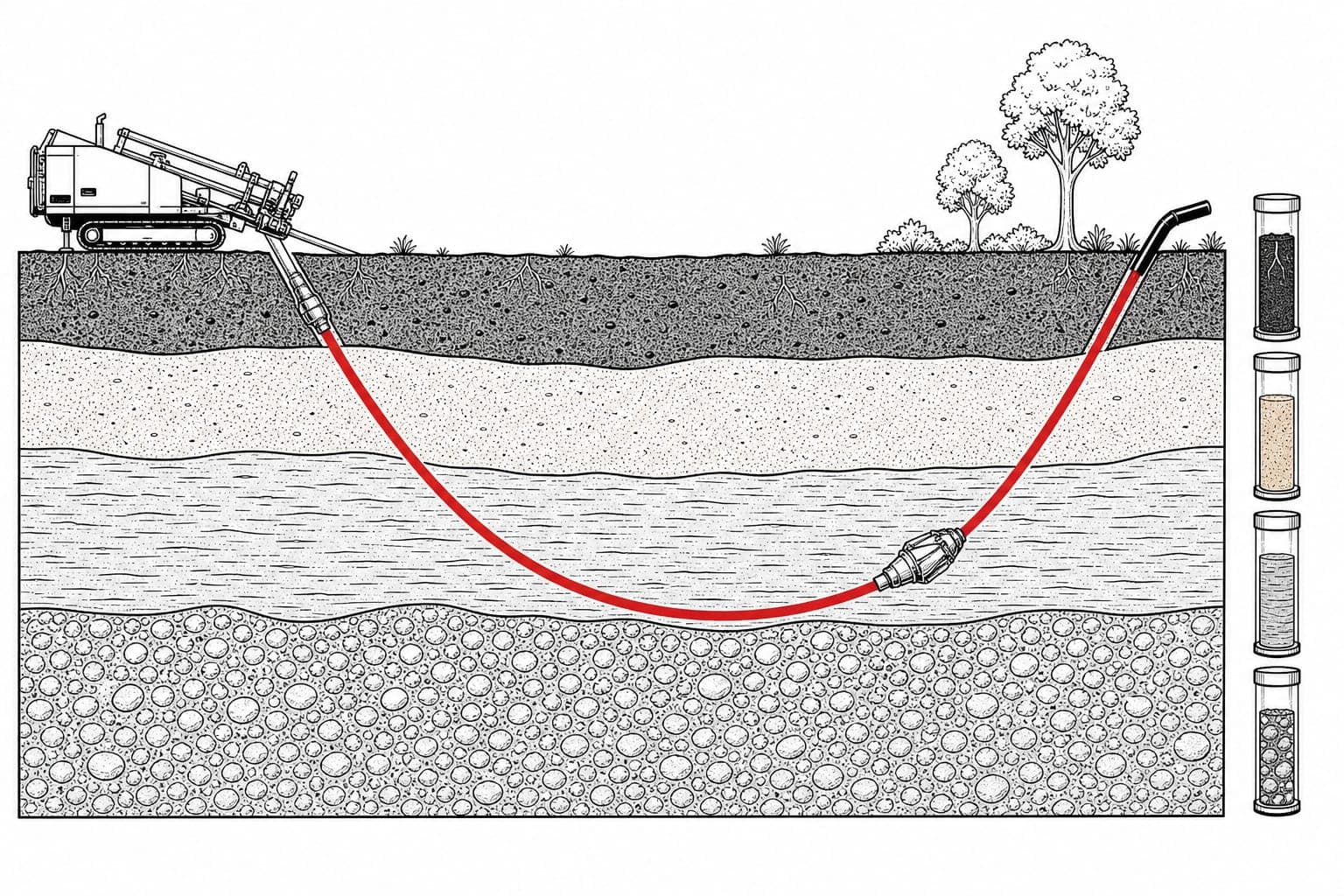
Geology (soil makeup, groundwater, rock) affects drilling speed, stability and how aggressive reaming must be. If data exists — we use it immediately.
Technical conditions, design drawings and existing-network plans help avoid utility conflicts and meet client requirements.
If materials are missing, we start with available information and a site look. Before works begin we state clearly what still must be obtained.
Examples
- Geotechnical report with borehole logs near the route
- Network operator conditions + site plan
- No data yet — start with photos, length/diameter and we list extras needed
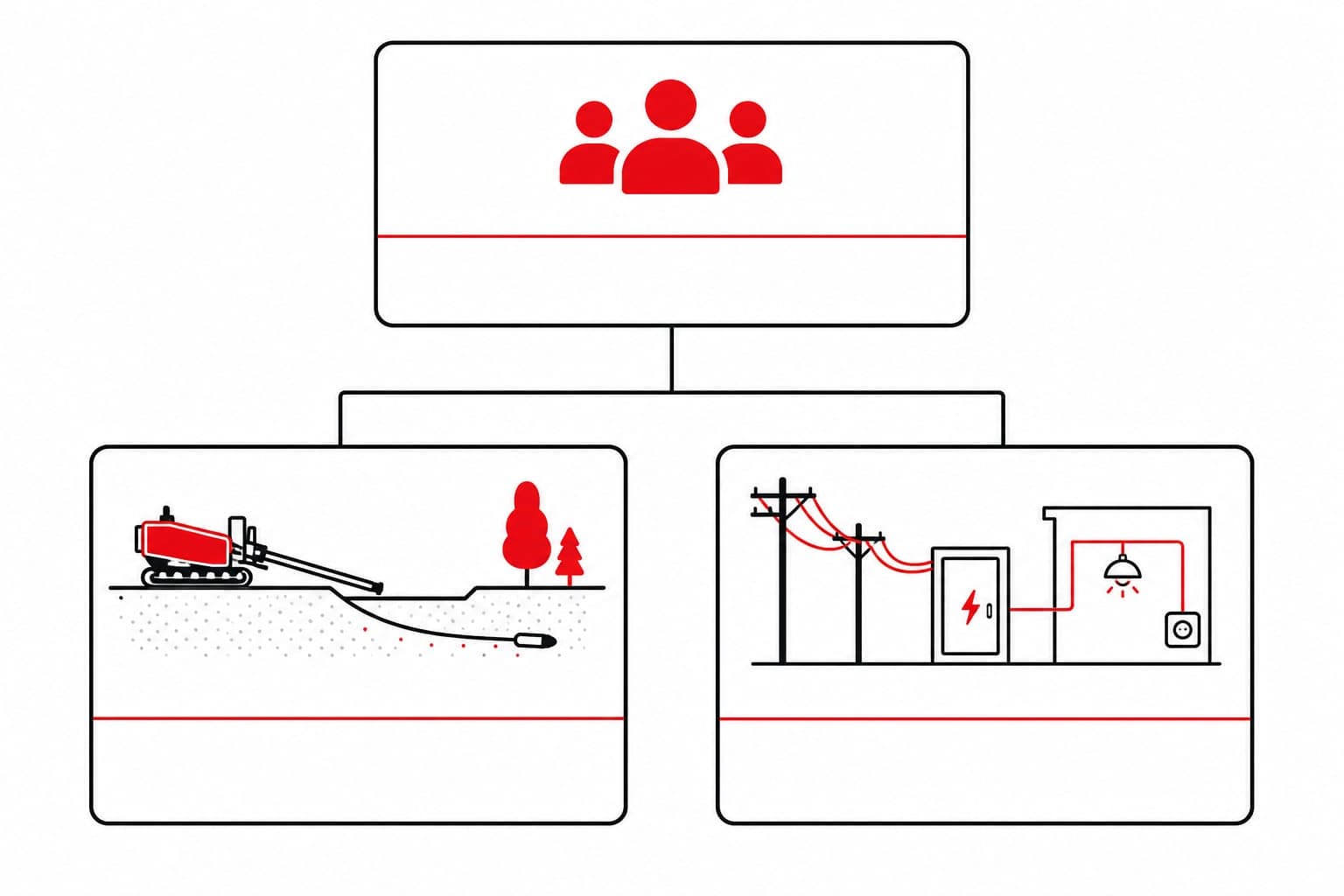
How is Baltijas Urbējs related to Foxberry?
Baltijas Urbējs SIA is a Foxberry Team company with a clear specialism — horizontal directional drilling.
Foxberry SIA, as the group parent, covers other utility engineering streams: water and sewerage, design and low-voltage solutions.
For the client that means clear ownership: drilling questions — baltijasurbejs.lv; water/sewer, design and low-voltage — foxberry.lv. If a site needs both, we align the workflow inside the group.
The goal is a simpler choice: not “everything on one page”, but the right specialist for the right job.
Examples
- HDD crossing only — you work with Baltijas Urbējs
- Utilities route + HDD under a road — Foxberry designs/builds, Baltijas Urbējs drills the crossing
- Low-voltage + casing pull — Foxberry + Baltijas Urbējs by task